
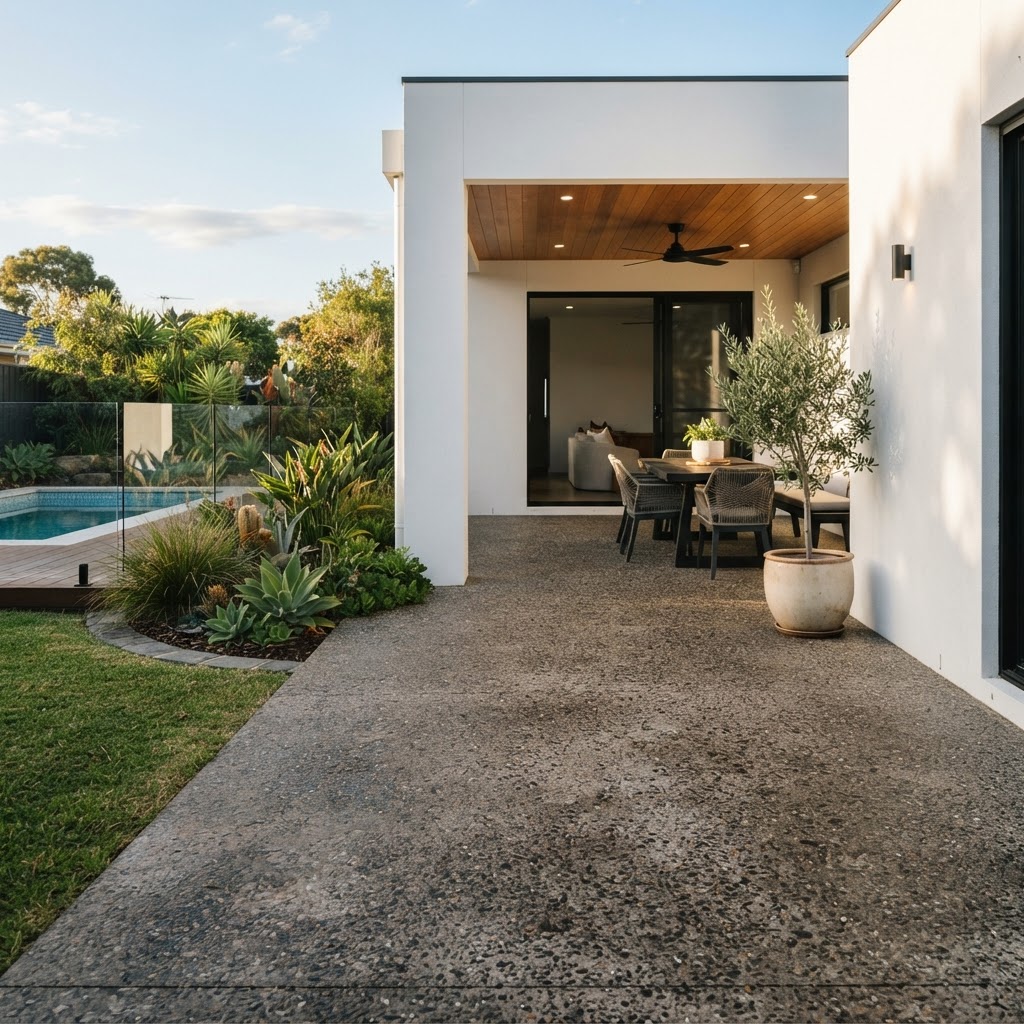
Bayside backyards and pools
Brighton East has one of the highest shares of separate houses near Brighton, at 67.9% of occupied dwellings in the 2021 Census, and it is one of the suburbs where backyard pools are part of family-home renovation plans. Beaumaris and Hampton are similar. Many pools in these suburbs are being built into established gardens, which means working around mature trees, side access and existing paving rather than an open new-estate block. Others are older pools being renovated, where the surrounding concrete is cracked, lifted or simply dated.
Choosing a surface that is safe and comfortable
Slip resistance comes first
Wet concrete around a pool needs grip. Slip resistance in Australia is assessed under standards such as AS 4586, and pool surround surfaces are generally expected to perform well when wet and barefoot. In practice, grip depends on:
- the texture of the finish (exposed aggregate and broom finishes grip better than smooth trowelled concrete)
- the stone size and exposure on exposed aggregate
- the sealer since some glossy sealers reduce grip unless an anti-slip additive is used
Heat underfoot
Dark surfaces absorb more heat. On a north-facing Bayside backyard in January, a charcoal surround can be uncomfortable for bare feet. Lighter stone blends, light base colours and honed finishes with pale aggregates stay cooler.
The look
Pool surrounds are usually seen from inside the house all year, so they deserve as much thought as the pool tiles. A surround in the same family of colours as the coping and the interior of the pool usually looks calm and resolved.
Finish options
Exposed aggregate. The most common choice. Grippy, durable and forgiving of leaves and footprints. A smaller stone with lighter exposure is kinder to bare feet. See exposed aggregate.
Broom-finished or coloured concrete. A practical, cost-conscious option with good grip when a fine broom texture is used. Colour should be chosen with heat and UV fade in mind.
Honed concrete. A light grind exposes the fine aggregate and sand for a smooth, contemporary look. Outdoors around water it must be treated for grip, usually with an anti-slip sealer. Honed and polished work is available on request; see polished concrete.
Stencil or textured finishes. Can imitate stone or pavers; grip and sealer choice need care.
Working with your pool builder
Concrete surrounds are best planned together with the pool, not after it. Points to coordinate:
Timing. The surround usually goes in after the pool shell and plumbing are complete and before the final fence.
Coping. Some pools use stone or tile coping with the concrete surround meeting it; others use a concrete bullnose or drop-edge formed as part of the surround. The joint between coping and surround is a flexible expansion joint so movement does not crack either.
Plumbing and equipment. Skimmer boxes, return lines, lighting conduit and the pump pad must be in place before the pour.
Levels. The surround must fall away from the pool so dirty water and debris do not wash in, and away from the house so it does not run towards walls or subfloor vents.
Designing the space around the water
A good pool surround is about more than a strip of concrete around the edge. Think about how the area will actually be used:
- Circulation. Leave enough width along the main side for two people to pass and for a sun lounge without blocking the path.
- Shade. Plan footings for umbrellas, shade sails or a pergola before the concrete goes down, so you are not core-drilling later.
- Wet edge to dry zone. Many families like a clear transition from the wet surround to a dry entertaining area or lawn, sometimes using a change in finish or a step.
- Outdoor shower. A simple shower near the gate keeps sand and salt out of the pool after a trip to Brighton Beach or Half Moon Bay, and needs a drain point planned into the concrete.
- Equipment access. Pumps, filters and heaters need a level pad and a clear path for servicing.
- Night use. Conduits for garden and step lighting are easiest to lay before the pour.
Getting these decisions made on paper first means the concrete only has to be poured once.
Falls and drainage
A surround that drains badly will stain, grow mould and send leaf litter straight into the pool. Typical designs fall away from the water edge towards garden beds or grated drains, which are connected to the stormwater system. In tight courtyards, slot drains along the edge of the paving or at the boundary keep runoff under control. Pool backwash and splash water should not be directed onto neighbouring land.
Pool fences and barrier footings
Pools in Victoria must have a compliant safety barrier, and pools and spas must be registered with the local council. Fence posts are often core-drilled into the concrete or set in footings before the pour. The barrier layout, gate positions and non-climbable zones affect where garden beds, steps and furniture can go, so the fence design should be settled before the concrete is finalised. We do not certify barriers: your pool builder, fencer and a registered building surveyor handle compliance.
Chlorine, salt water and sealing
Salt-water chlorinated pools are popular in Bayside. Splash water and salt-laden air can, over time, attack unsealed concrete surfaces. A good sealer reduces the water and salt that soaks in, and an anti-slip additive keeps grip. Sealer choice is a balance:
- Penetrating sealers soak in and change the look very little. They protect without forming a film that can be slippery.
- Film-forming sealers give a richer, wet look and make cleaning easier, but must be chosen and applied with grip in mind and will need recoating as they wear.
See concrete sealing and our coastal concrete care guide for more.
Trees, leaves and root zones
Large trees are part of Bayside's charm but hard on pool areas. Roots can lift concrete close to trunks, and leaves stain surfaces and clog skimmers. A good design keeps adequate distance from significant trees, uses root barriers where suitable and chooses a finish that hides leaf litter. Council permits may apply to protected trees.
How a pool surround job runs
Site look with plans
We look at the pool plans, levels, access and the fence layout.
Coordinate timing
with the pool builder and fencer.
Base preparation
Excavation and a compacted base around the pool, taking care not to damage plumbing.
Formwork, steel and joints
Forms set the falls; reinforcement goes in; expansion joints are placed at the coping.
Pour and finish
The chosen finish is applied, with the exposed aggregate washed off or honing scheduled.
Cure, clean and seal
ideally before the final fence and landscaping go in.
What affects a pool surround quote
- the area and shape of the surround and any steps or level changes
- access to the backyard for concrete and machinery
- removal of existing paving or concrete
- coping and edge details
- the finish, stone blend and any honing
- drainage and grated drains
- fence footings and core holes
- sealer type and anti-slip additive
Prices are never shown on this site. A free site look gives you a written quote.
Pool areas around Brighton
Pool surrounds are a focus in Brighton East, Beaumaris and Hampton, where family homes on larger lots dominate. For entertaining space next to the pool, see concrete patios and concrete steps.
Pool surround FAQs
Exposed aggregate with a small to medium stone and light exposure is a popular balance of grip, comfort and durability. Broom-finished and honed concrete with an anti-slip sealer are also common.
It should not be if the finish and sealer are chosen for wet, barefoot use. Smooth trowelled or high-gloss sealed surfaces can be slippery, which is why texture and anti-slip additives matter.
Over time, salt splash and salt air can affect unsealed concrete. Sealing and occasional re-sealing help protect the surface.
Usually after the pool shell, plumbing and coping details are finished, and before the final fence and landscaping. Your pool builder will advise the best sequence.
Darker colours and stones get hotter in direct sun. Lighter blends and base colours stay noticeably cooler underfoot.
Yes. The old surround is carefully removed without damaging the pool shell, coping or plumbing, then a new base and surround are poured.
Related Services
Get a pool surround quote
Share your pool plans or photos of the existing area. We will arrange a free site look and a written quote with no obligation.