
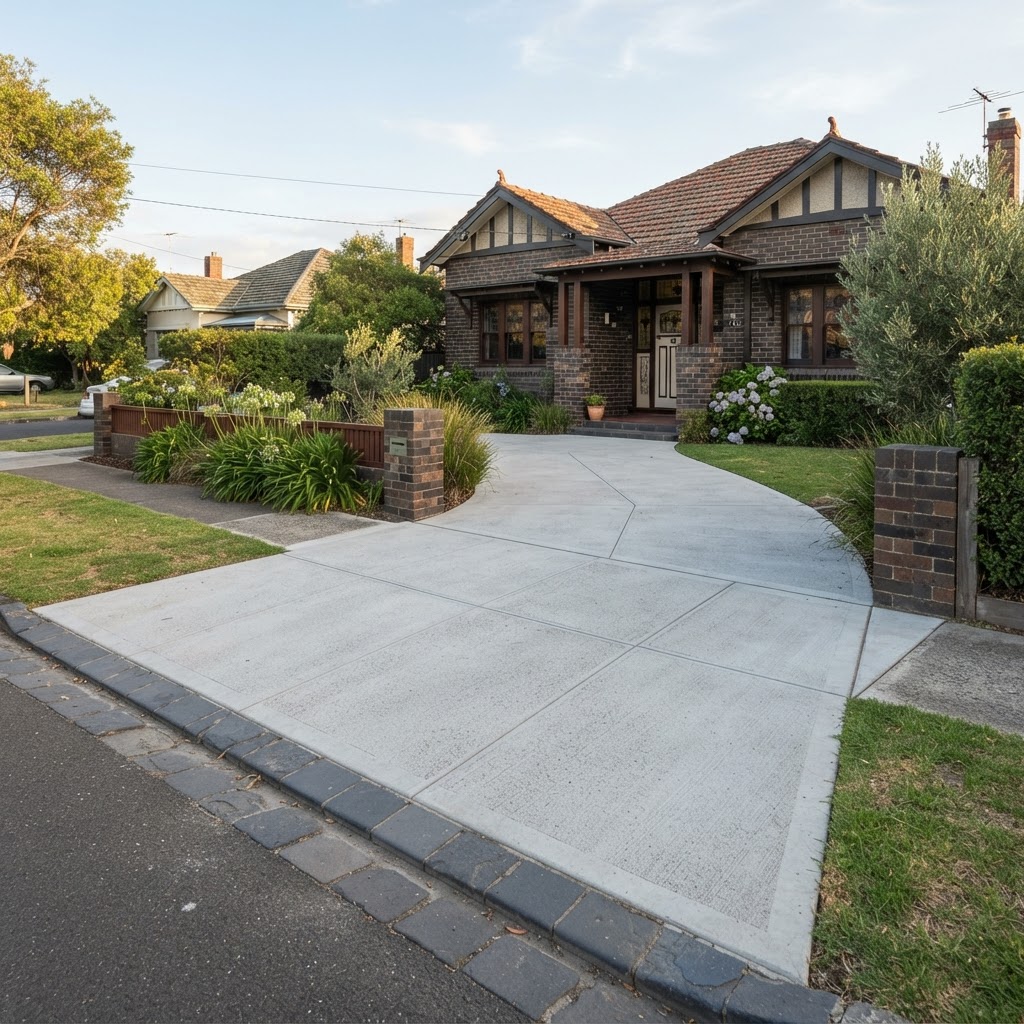
Repair, resurface or replace?
Not every tired driveway needs to go. A fair assessment looks at what is wrong and why.
Resurfacing or repair can work when:
- the slab is level and solid, with no rocking panels
- cracks are fine and not getting wider
- the problem is mostly cosmetic: staining, wear or a faded colour
- a single damaged panel can be cut out and replaced at the joints
Replacement is usually the honest answer when:
- panels have sunk, tilted or lifted so there are trip edges
- cracks are wide, growing or run in several directions across panels
- tree roots have pushed the slab up
- water pools against the garage or runs towards the house
- the driveway is too narrow or at the wrong grade for how you use it now
- an overlay has already been tried and is peeling or delaminating
If replacement is not needed, you should hear that. Our repairs and resurfacing page explains the alternatives.
Why old Bayside driveways fail
Thin, unreinforced slabs. Older driveways were often poured thinner than modern practice and without mesh. They cope for decades with light cars, then crack as vehicles get heavier.
Settled or washed-out bases. On sandy coastal ground, water running under a slab can carry fine material away, leaving voids. Further inland, reactive clays move with the seasons and crack slabs that were not designed for it.
Tree roots. Street trees, neighbours' trees and the established gardens that make Bayside so attractive all send roots under driveways. As roots thicken they lift and split the concrete.
Drainage that was never designed. Many older driveways simply fall towards the garage or the house. Over time that water undermines the base and can affect footings.
Salt and age. Close to the foreshore in Sandringham, Black Rock and Brighton, decades of salt air can scale an unsealed surface and, where cover to steel was thin, cause rusting and spalling.
Tree roots: a careful conversation
Roots are the most common reason for replacing a driveway in leafy Bayside streets, and they need care. Cutting major roots can harm or destabilise a tree, and street trees are council assets. Significant trees may also be protected by local laws or planning controls. Where roots are involved, the options may include root barriers, bridging the slab over a root zone with extra reinforcement, adjusting the driveway layout, or getting advice from an arborist. Your quote will flag where tree advice is needed.
Staging the work so you keep access
Replacing a driveway means losing it for a while. Planning reduces the disruption:
Street parking. Plan where cars will go for the job and curing period, especially in streets with permit parking.
Halving the job. On wider driveways, one side can sometimes be replaced first and the other later, keeping partial access.
Garage contents. Anything you need from the garage should come out before demolition.
Bins and deliveries. Arrange an alternative path for bins and parcels during the work.
How a driveway replacement runs
Site look
Measure the existing driveway, check levels, drainage, trees, services and access for machinery and trucks.
Written quote
Demolition, disposal, base, steel, finish, drainage and crossover works are spelt out.
Permits
If the crossover is being replaced or widened, the council permit is approved first.
Break-out
The old concrete is saw-cut at the boundaries and broken up with a small excavator or breaker, then loaded and taken to a recycler. Concrete rubble is commonly crushed and reused.
Base correction
This is where replacement earns its value. Soft ground is dug out, roots are dealt with as agreed, and a new compacted crushed-rock base is laid at the correct falls.
Drainage
Trench drains or pits are installed where needed and connected to the stormwater system.
Formwork and steel
New forms set the shape and levels; reinforcement is placed on chairs.
Pour and finish
Plain, coloured or exposed aggregate, with joints cut at the right spacing.
Cure and seal
Keep cars off until you are told it is ready, then seal if specified.
Upgrade while you are at it
Replacement is a rare chance to change things:
- Widen for a second car or easier turning, subject to council crossover rules.
- Change the finish from tired grey to exposed aggregate or a charcoal oxide.
- Fix the grade at the garage door or where the driveway meets the footpath.
- Add paths or a bin pad in the same pour so everything matches.
- Plan for the future such as conduit under the driveway for garden lighting or an EV charger.
Timing your replacement
If a renovation, extension or new fence is coming, replace the driveway last. Skip bins, scaffold trucks and excavators can crack a brand-new slab, and builders often need the frontage for deliveries. Autumn and spring are comfortable times to pour in Melbourne, because very hot, windy days make finishing harder and cold, wet spells slow curing, but a well-run job can be done most of the year with the right precautions. Book the site look early so permits are approved before your preferred window.
Asbestos and old surfaces
Some older properties have materials under or beside driveways, such as old fibre-cement sheeting used as formwork or buried building waste, that may contain asbestos. If suspected materials are found, work stops in that area and the material is assessed and removed by a licensed asbestos removalist in line with WorkSafe Victoria requirements before concreting continues.
What affects a replacement quote
- the area and thickness of concrete to remove, and whether it is reinforced
- access for an excavator, breaker and trucks
- disposal and recycling of rubble
- the condition of the ground and how much base needs replacing
- tree roots and any arborist involvement
- drainage upgrades
- the new finish and reinforcement
- crossover replacement and council permit
No prices are published here. A site look gives you a written quote for your driveway.
Replacement work in Bayside suburbs
Driveway replacement is a major part of the work in Sandringham, where many homes are decades old and close to the foreshore. In Moorabbin and Beaumaris, many older houses still have their original driveways. Hampton owners often replace and upgrade to exposed aggregate during a renovation. See also vehicle crossovers.
Driveway replacement FAQs
Demolition and base work often take a day or two, with the pour following once forms and steel are ready. Allow curing time before driving on it. Weather, inspections and what is found under the old slab affect the timeline.
Pouring a new slab straight over a failing one usually copies the old cracks and raises levels against the garage and house. Thin overlays only suit sound concrete. A failing driveway is best removed.
It is broken up and taken to a recycler where possible. Clean concrete rubble is commonly crushed into recycled aggregate.
Usually it is kept at a similar level so it meets the garage, paths and footpath properly. Levels are set at the formwork stage and can be adjusted to fix old drainage problems.
The private driveway usually does not need a crossover permit, but replacing the crossover does. Heritage or planning controls can apply in some streets.
Sometimes, but cutting large roots can harm a tree, and street trees belong to the council. Root issues are assessed case by case, sometimes with an arborist.
Get a replacement quote
Send a few photos of your current driveway, including any cracks, lifted panels or puddling. We will arrange a free site look and a written quote.