
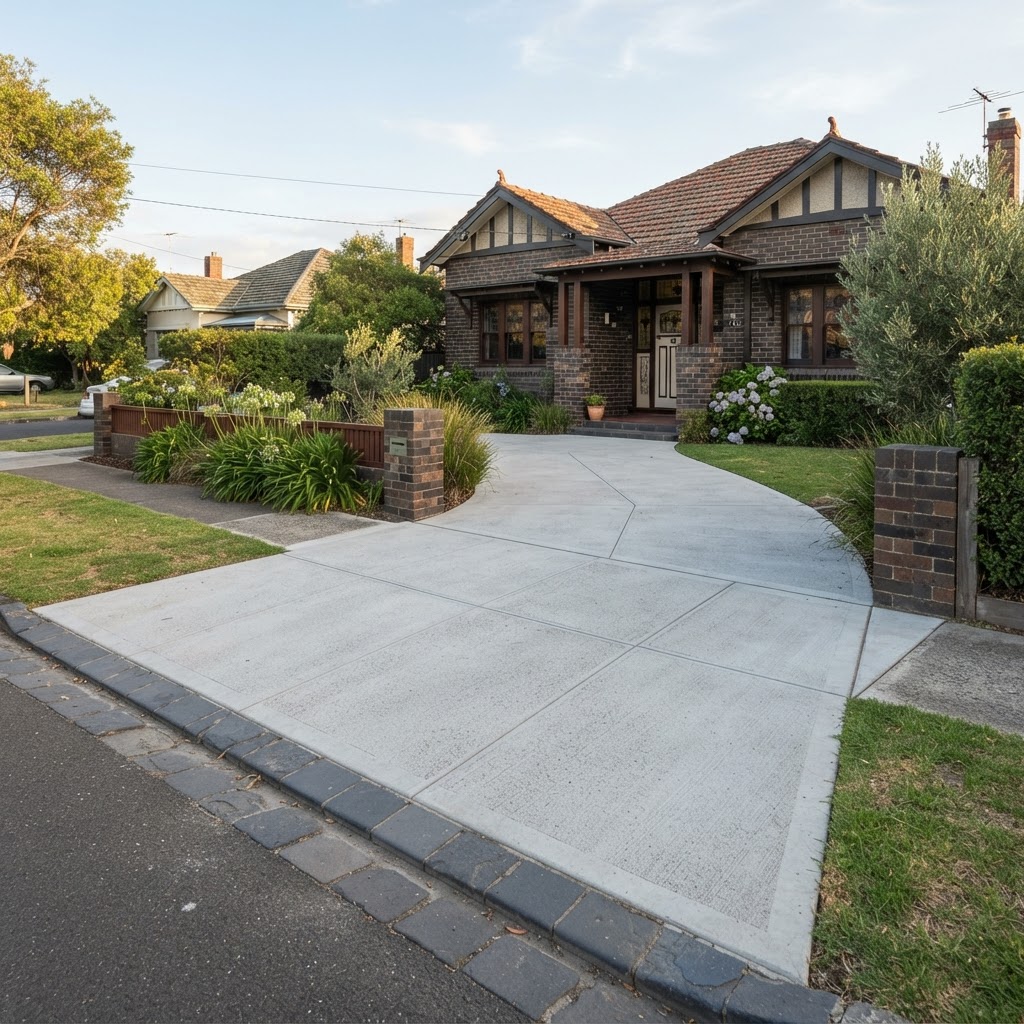
Paths around the home
Side paths
The narrow strip between the house and the fence is one of the hardest-working areas on a Bayside block. It carries bins, bikes, garden waste and tradespeople, and it is often where downpipes discharge. A good side path is level enough to roll bins, falls away from the house, and stays clear of weep holes and subfloor vents. Where it runs past a neighbour's fence, it should not push water onto their side.
Front entry paths
The path from the front gate to the door sets the tone of the house. On a Victorian or Edwardian home in Brighton, that might be a simple charcoal path with crisp edges beside a tiled verandah; on a contemporary rebuild in Hampton, an exposed aggregate path that matches the driveway. Width, a gentle curve or a straight axis, and lighting all affect the feel.
Garden and utility paths
Paths to the shed, veggie beds, compost area or clothesline. Often narrow and simple, but they still need a proper base so they do not crack and sink.
Bin pads and service areas
A level pad for bins, a water tank, heat pump or air-conditioning unit keeps equipment stable and the area tidy.
Footpath reinstatement after building works
When building or demolition works damage the public footpath, kerb or nature strip outside a property, councils generally require it to be reinstated to their standard. Bayside also uses asset protection permits for building works, which record the condition of council assets before works start so damage can be identified afterwards. In practice, reinstatement means:
- confirming the council's requirements and any permit needed for working in the road reserve
- saw-cutting and removing the damaged footpath sections to the nearest joints
- preparing the base and forming to the council's standard drawings
- arranging any required inspection before or after the pour
- pouring and finishing to match the council's specified finish
Kingston, for example, requires a Road Opening Permit for footpath construction or repair in the road reserve and a pre-pour inspection of formwork. Glen Eira's vehicle crossing permits cover the adjacent footpath as well. Each council is different, so requirements are confirmed for your address. Bayside's own permit details are on the council website.
Getting drainage right on paths
Downpipes, garden beds and paths all meet along the side of a house, and that is where water problems start. A path should:
- fall away from the house wall
- not trap water against fences or garden edges
- have grated drains or pits where water would otherwise pool
- leave downpipes connected to stormwater rather than spilling onto the path
On sandy Bayside ground, water that pools at the edge of a path can wash out the base over time, leading to sunken edges and cracks.
Finishes for paths
- Plain concrete with a broom finish: grippy, tidy and practical for side paths.
- Coloured concrete: a charcoal or warm grey tone softens the look and suits period homes.
- Exposed aggregate: ties the path to the driveway and hides dirt. See exposed aggregate.
- Borders and banding: a contrasting edge or saw-cut pattern adds interest to a front path. See decorative concrete.
Paths and period homes
Brighton, Elsternwick and Caulfield South have many Victorian, Edwardian and inter-war houses where the front path is part of the heritage character. Some still have original tessellated tiles on the verandah and a path in bluestone, brick or early concrete. Where original materials survive in good condition, restoring them can be the better choice. Where a concrete path is replacing a broken one, simple detailing usually looks most at home: a straight run from gate to steps, a muted charcoal or natural grey, and clean edges against the garden. Heritage overlays may apply to some front gardens and fences; check your planning property report before making major changes visible from the street.
Tree roots and paths
Street trees and large garden trees are common in Bayside, and their roots often lift paths, especially narrow, thin ones. Options include reinforcing the path, using a root barrier, rerouting the path slightly, or leaving a gap around the root zone. Cutting large roots can harm a tree, and significant or street trees may be protected, so roots are always assessed before work starts.
Steps, ramps and level changes
Where a path meets a change in level, it may need steps or a gentle ramp. Ramps suit bins, prams and anyone with limited mobility. See concrete steps for stairs and landings.
How a path job runs
Site look
Measure the route, check levels, downpipes and drainage, and confirm any council footpath work.
Written quote
Scope, finish and any permits.
Preparation
Remove old surfaces, excavate and lay a compacted base.
Formwork and steel
Forms set to falls; reinforcement where needed.
Pour and finish
The chosen finish is applied and control joints cut.
Cure
Keep off it until advised, then seal if specified.
What affects a path quote
- length, width and shape of the path
- access, particularly for rear and side paths
- removal of existing paving, concrete or garden edging
- drainage, grated drains and downpipe connections
- finish and sealing
- council permits and inspections for footpath work
We never publish prices. A free site look gives you a written quote.
Paths around Bayside
Side and front paths are popular small jobs everywhere we work, from Caulfield South and Elsternwick period homes to Highett townhouses and Sandringham family homes. Related services: concrete driveways and vehicle crossovers.
Concrete path FAQs
Wide enough to roll a wheelie bin comfortably and walk beside it. The available space between the house and the fence often decides, and the path should stay clear of vents and weep holes.
Many residential paths are reinforced with mesh to control cracking, especially where the ground is soft or vehicles might cross. Your quote should state what is included.
Yes, a path can sit against the wall, provided it stays under the damp-proof course, not block weep holes or vents, and fall away from the wall.
Councils commonly require the owner or builder to reinstate damaged footpaths to the council standard. Check your council's requirements and permits.
We can get close by using the same or a similar stone blend, although weathering means the new path will look fresher for a while.
Light foot traffic is often fine within a day or two. Avoid wheelbarrows, bins and heavy loads until your concreter says it is ready.
Concrete is usually more stable for bins and wheelbarrows, has no gaps for weeds and does not lift paver by paver. Pavers are easier to lift for access to services underneath. Your choice depends on what sits under the path and how it is used.
Related Services
Get a path quote
Send photos and a rough length of the path you need. We will arrange a free site look and a written quote.