
Who lives in Black Rock
At the 2021 Census, Black Rock had 6,389 residents and a median age of 49, one of the oldest in our area. Separate houses made up 56.0% of occupied dwellings, while semi-detached homes and townhouses accounted for a striking 34.2%, the highest share among the suburbs we cover. Flats were only 8.0%. Almost half of households (49.6%) owned their home outright.
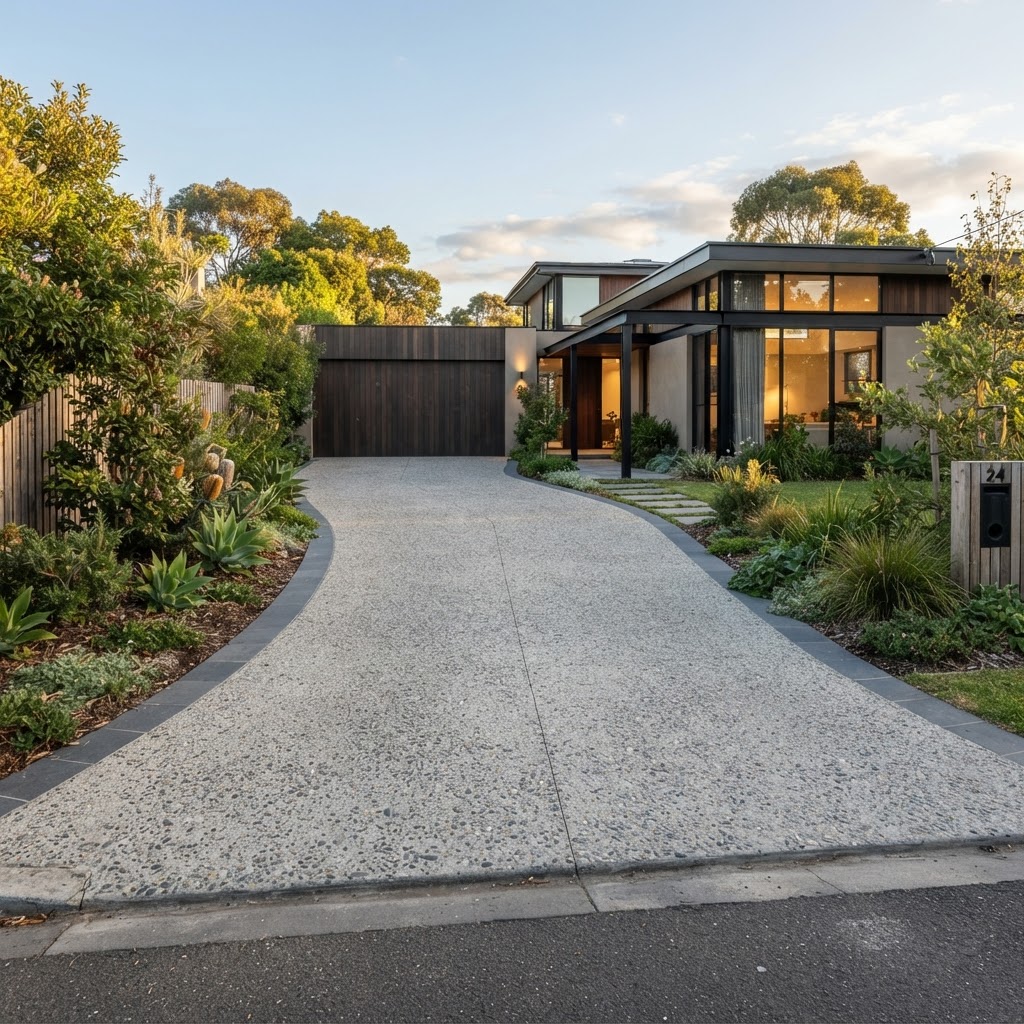
Those numbers describe a suburb in transition. Many long-time owners live in original family homes, while a significant share of blocks have been redeveloped into pairs of townhouses or units. Both generate concrete work: replacing ageing driveways and paths on original homes, and building shared driveways, courtyards and garage slabs on new developments.
From Bluff Town to bayside village
Black Rock takes its name from the grand residence built by Charles Ebden in 1856, named after Black Rock near Dublin. The area between Beach Road and Bluff Road was one of Josiah Holloway's early estates in the 1850s, called Bluff Town, and it grew slowly. Black Rock House still stands, as does "The Rock", an Edwardian residence on Beach Road near the clock tower. The Black Rock Life Saving Club dates from 1928, and Beach Road is famous with cyclists as a starting point for rides down the bay.
Clifftop and coastal exposure
Few suburbs sit as exposed to the bay as Black Rock. Homes on and near Beach Road catch the full force of westerly and south-westerly winds off the water, along with salt spray and the occasional blast of sand. That exposure affects concrete in several ways:
- Salt deposition on driveways, paths and patios, which can lead to surface scaling on unsealed concrete over time.
- Faster sealer wear , particularly on exposed aggregate and coloured finishes facing the water.
- Corrosion risk for reinforcement with too little concrete cover.
- Wind-blown sand that scours surfaces and clogs drains.
For new work close to the foreshore, adequate cover over steel, careful curing and a good sealer are essential, and drains should be easy to clean. For existing concrete, regular hosing and timely re-sealing help. See the coastal concrete care guide and concrete sealing.
Townhouse redevelopment and shared driveways
With more than a third of Black Rock dwellings being semi-detached, shared and side-by-side driveways are a big part of the work. Typical requirements include:
- a narrow driveway running beside the front dwelling to reach the rear garage
- separate bin, letterbox and meter areas that do not block either driveway
- garage slabs and courtyards for each dwelling
- drainage designed so runoff from one dwelling does not flow to the other
On new developments, the concrete is usually poured near the end of the build, coordinated with the builder. On existing townhouses, owners corporation agreement may be needed for common driveways. See concrete driveways.
Slopes, steps and retaining
Black Rock's land rises from the beach towards Bluff Road and beyond, and some streets near the cliffs have noticeable slopes. Sloping blocks call for driveways with carefully controlled grades, trench drains at garages that sit below street level, and terraced gardens held up by retaining walls with steps linking the levels. Drainage behind retaining walls is especially important where water runs downhill towards the bay.
Crossovers in Black Rock
Black Rock is in the City of Bayside, so crossovers need a Bayside vehicle crossing permit. Bayside wants a dimensioned plan showing pits, trees and poles, written approval for any public asset within a metre, and a public liability insurance certificate. On townhouse sites, a key rule is separation: if a new crossover would sit within a metre of another, a 1-metre separator is generally required unless traffic engineers agree otherwise. Crossovers near the Beach Road and Balcombe Road intersection, or any intersection within 9 metres, are generally not approved. See our vehicle crossovers page.
Finishes that suit the coast
Exposed aggregate is the most popular choice in Black Rock for its grip and its ability to hide sand and salt residue. Lighter, natural stone blends suit the coastal light and stay cooler underfoot near pools. Plain broom-finished concrete is practical for side paths and townhouse driveways. Whatever the finish, sealing is a must this close to the water. See exposed aggregate.
Original homes and long-held properties
With nearly half of Black Rock households owning outright and a median age near 50, many homes have been in the same hands for decades. Their concrete often tells that story: a driveway poured when the house was new, side paths patched over the years, and a back patio that has settled away from the house. For these owners, the questions are usually practical. Is it safe? Will it last? Is it worth replacing, or will a repair and seal do? An honest site look answers those questions without pressure. Safety improvements such as replacing a lifted path section, adding a handrail to entry steps or levelling a sunken patio near the back door are common, worthwhile jobs. See concrete repairs.
Pools and outdoor areas near the beach
Backyards in Black Rock are sheltered from the worst of the wind by houses and fences, making them good spots for patios and pools. Pool surrounds near the coast should use a grippy, salt-tolerant finish and a sealer suited to both salt-water pools and salt air. Light, natural aggregate blends stay cooler underfoot. An outdoor shower by the back gate helps keep beach sand out of the house and the pool. See pool surrounds.
Jobs commonly requested in Black Rock
- New and replacement driveways, including shared driveways
- Exposed aggregate and
- sealing
- Retaining walls and
- steps on sloping blocks
- Patios and courtyards for townhouses
- Concrete repairs for salt-affected surfaces
What affects a Black Rock quote
We do not publish prices. In Black Rock the main factors are the size of the job, access on narrow townhouse sites, removal of old concrete, slope and retaining, drainage, the finish and sealing, reinforcement and cover near the coast, and crossover permits. See the driveway cost factors guide.
Black Rock concreting FAQs
Yes. Salt spray and wind-blown sand can wear unsealed surfaces and sealers faster. Good reinforcement cover, a well-cured surface, sealing and regular hosing help concrete last.
Possibly, but Bayside generally requires a 1-metre separator between crossovers within a metre of each other, unless its traffic engineers approve otherwise.
Sealed exposed aggregate in a natural, lighter blend is a popular choice for grip, durability and hiding sand and salt residue.
Yes. Concrete sleeper and block walls with proper drainage are common for terracing sloping gardens.
It depends on exposure and the sealer. Re-seal when water stops beading on the surface; homes near Beach Road usually need it sooner than those further inland.
Yes. A single lifted or sunken section can usually be cut out at the joints, the base corrected and a new section poured. It will look newer than the surrounding concrete for a while.
Related Services
Nearby suburbs
We also cover Beaumaris, Sandringham, Highett and Hampton. See all service areas.