
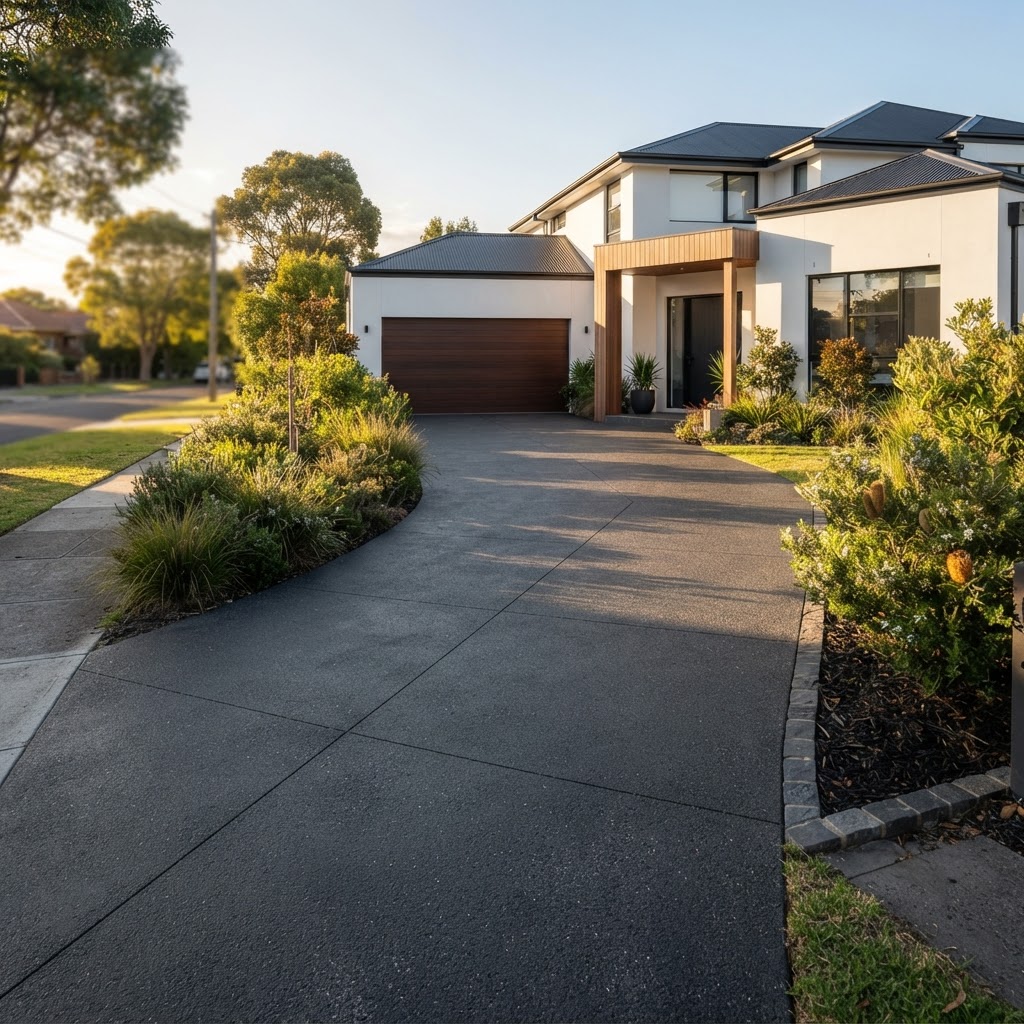
What we mean by polished, honed and ground
These terms get used loosely, so it helps to define them.
Ground and sealed. The surface of the concrete is ground with diamond tooling to remove the top layer and level the floor, then a topical sealer is applied. The look depends on how deep the grind goes.
Honed. The concrete is ground and then refined with finer diamonds to a smooth, matte or satin finish, and usually sealed with a penetrating or topical sealer. Honed finishes are common outdoors and in areas where a high gloss is not wanted.
Mechanically polished. The floor is ground through progressively finer diamonds, densified with a chemical hardener and polished to a sheen that comes from the concrete itself rather than a coating. Higher levels of polish give a more reflective finish.
Choosing the exposure level
How much aggregate shows depends on how deep the grind goes:
- Cream finish (minimal exposure): only the top skin is refined, showing mostly cement paste with occasional fine sand. A soft, even look.
- Salt and pepper (light exposure): fine sand and the tips of small stones show, giving a speckled appearance.
- Full aggregate (deep exposure): the grind cuts into the larger stones, revealing them in cross-section, like terrazzo.
The concrete mix matters. If you want a particular stone to show in a full exposure, it must be specified in the mix before the slab is poured.
New slab or existing slab?
Planning on a new slab
The best results come from planning the polished finish before the slab is poured. Points to settle early include:
- the concrete mix and any decorative aggregate
- how flat and level the slab needs to be
- where control joints will go, since they will remain visible
- protecting the slab during the build so it is not stained by plaster, paint, oil or rust from steel
- when in the build the grinding will happen
Talk to us at the same time as planning a concrete slab for an extension.
Grinding an existing slab
Existing slabs can sometimes be ground and polished, but the result is less predictable. Old slabs may have glue residue from carpet or tiles, patches, cracks, uneven levels and stains that cannot be removed. A small test area helps show what the floor will look like. In some cases a honed or ground-and-sealed finish is a better choice than a high polish.
Outdoors: grip comes first
Honed concrete is popular for alfresco areas and pool surrounds because it connects visually with an internal polished floor. Outdoors, however, a smooth surface can be slippery when wet. Typical solutions include:
- choosing a honed rather than polished finish
- using a penetrating sealer with an anti-slip additive
- leaving a slightly coarser grit level in wet areas
Bayside salt air and sun also mean outdoor honed concrete should be sealed and maintained. See pool surrounds and concrete patios.
Caring for a polished or honed floor
Day-to-day care is simple. Dry-mop or vacuum to remove grit, which acts like sandpaper under shoes and chair legs. Damp-mop with a pH-neutral cleaner made for sealed or polished concrete; vinegar, bleach and strong degreasers can dull the surface or damage sealers. Wipe up wine, citrus juice, oil and coffee promptly. Put felt pads under furniture legs and use mats at external doors to catch sand, which matters near the beach. Topical sealers and guards can be refreshed when traffic areas start to look dull, while mechanically polished floors can be re-burnished. Outdoors, hose off salt and leaves regularly and re-seal when water stops beading.
Polished concrete vs tiles and timber
There is no price comparison here, but there are practical differences to weigh:
- Durability: a well-finished concrete floor is hard-wearing, but it can chip if something heavy is dropped on an edge, and it will show hairline cracks if the slab cracks.
- Comfort: concrete is hard underfoot and can feel cool in winter. It pairs well with in-slab or hydronic heating, which must be planned before the slab is poured.
- Acoustics: hard floors reflect sound; rugs and soft furnishings help.
- Maintenance: sealed or densified concrete is easy to sweep and mop with pH-neutral cleaners. Topical sealers need occasional recoating.
- Look: concrete gives a seamless, industrial or natural look that tiles and timber do not.
The disadvantages, honestly
- Cracks show. Concrete shrinks and moves. Even a well-built slab may develop fine cracks that become part of the floor's character.
- Stains are possible. Wine, oil and acidic foods can mark an unsealed or poorly sealed floor.
- It is hard. Dropped glassware rarely survives.
- It needs planning. The best results depend on decisions made before the slab is poured.
- Variation is normal. Every slab is different; colour, aggregate distribution and minor blemishes are part of the material.
Protecting a new slab during the build
On a renovation, the slab that will become your polished floor often spends weeks as a building site. Trades walk on it in work boots, scaffolding and ladders scrape it, plasterers and painters drip on it, and steel left lying around can leave rust stains. Some of that comes off in the grind; some does not. Protection measures to discuss with your builder include:
- covering the slab with a breathable protective sheet once it has cured enough
- banning oil, diesel and acidic products from the area
- keeping steel off the surface and cleaning up spills straight away
- agreeing when in the build the grind will happen, often before walls are painted and joinery installed, with the final polish later
Heating, joints and level
Hydronic in-slab heating pipes and electric heating cables must be installed before the pour and kept clear of saw-cut joints and grinding depths. Control joints are needed to manage shrinkage, and they will remain visible in a polished floor, so their layout should be agreed and set out neatly, often aligning with walls, doorways or islands. Where the floor must meet existing timber or tiled floors at the same height, levels need careful planning so the transition is flush after grinding removes a little of the surface.
How a polished or honed floor project runs
Discussion and site look
We talk about the look you want, where the floor is, and whether it is a new or existing slab.
Test or sample
For existing slabs, a small test area may be ground to show the likely result.
Grinding
Diamond tooling levels the surface and exposes the chosen depth of aggregate.
Grouting and repairs
Pinholes and small defects are filled with a matching grout.
Densifying and refining
For polished floors, a densifier is applied and the floor is refined through finer grits.
Sealing or guarding
The finished floor gets a penetrating densifier-sealer or a topical guard against stains.
Handover
You receive care instructions for the finish.
What affects a polished concrete quote
- floor area and number of rooms
- new slab or existing slab, and its condition
- removal of glue, tiles or other coverings
- exposure level and polish level
- crack and joint treatment
- edges, steps and tight corners
- sealer or guard type
- access and protection of finished walls and joinery
Prices are never published on this site. Ask for a free site look and written quote.
Where honed and polished finishes appear in Bayside
Polished floors often feature in extensions in Brighton East and Hampton, and honed alfresco slabs are popular in Beaumaris. Availability depends on the project and partner scheduling, so please ask early.
Polished concrete FAQs
Polished, honed and ground finishes are available on request. They are arranged through a local concreter and, where needed, a partner with dedicated grinding equipment. Ask early so the right people can look at your project.
Honed concrete is ground to a smooth matte or satin finish and sealed. Polished concrete is refined further and densified to produce a sheen from the concrete itself.
Indoors when dry it generally performs well. Wet polished surfaces can be slippery, so outdoor and wet areas usually use a honed finish with an anti-slip sealer.
Sometimes. Existing slabs vary, and glue, patches and cracks can limit the result. A test area helps show what is achievable.
It depends on the slab, the finish level and the tiles you are comparing with. We do not quote prices online; a site look gives you a written quote.
Concrete can crack as it shrinks and moves. Good slab design, joints in the right place and careful curing reduce the risk, but fine cracks are possible.
Related Services
Ask about polished concrete
Tell us about the room, the slab and the look you want. We will let you know whether a polished or honed finish is a good fit and arrange a site look.