
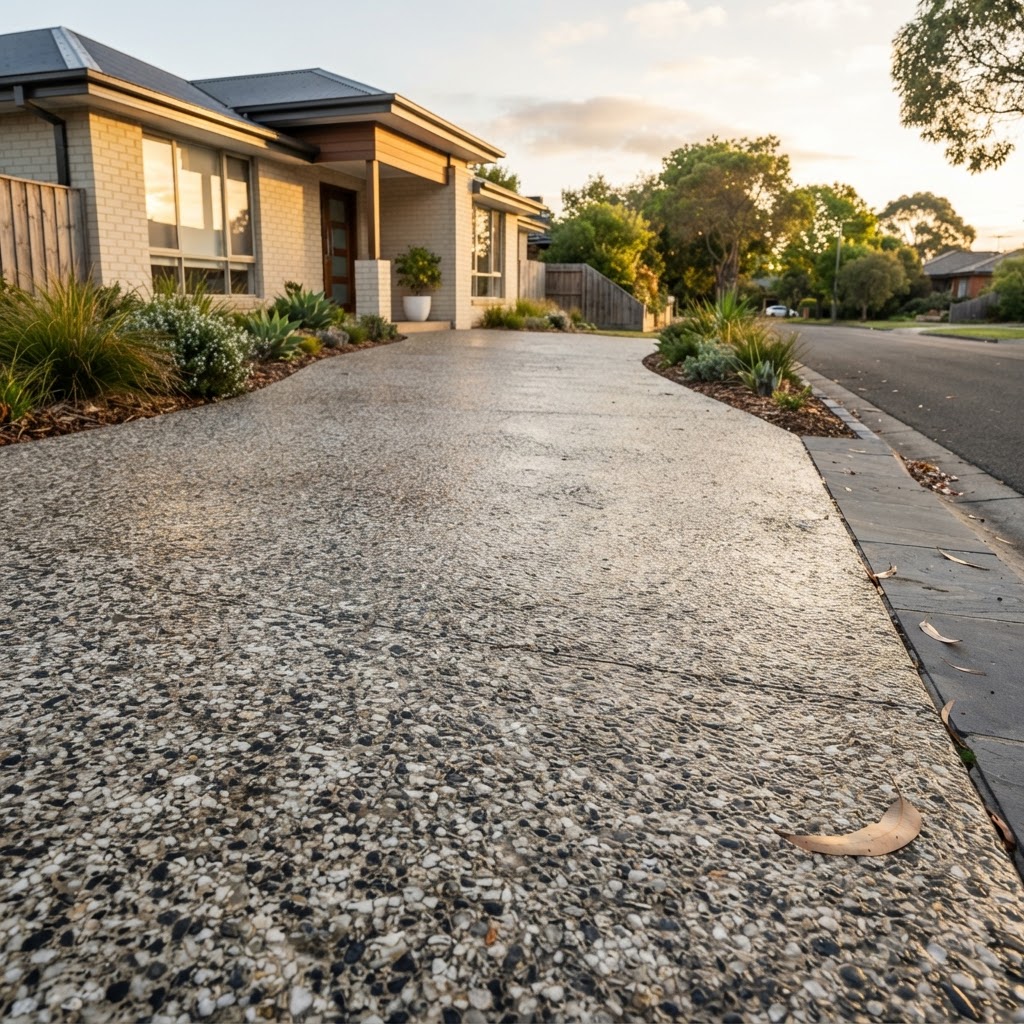
What a sealer actually does
Concrete is porous. Without protection, water, salt, oil and dirt soak into it. A sealer reduces how much gets in. Depending on the type, sealing can:
- slow the penetration of salt-laden moisture
- make oil, wine and leaf stains easier to clean
- deepen and enrich the colour of stone and pigments
- reduce dusting and help hold exposed aggregate stones in place
- slow UV fading of coloured surfaces
Sealers do not make concrete stronger, fix cracks or stop structural problems.
Types of sealer
Penetrating sealers
Silane, siloxane and similar sealers soak into the concrete and react to repel water from within. They leave little or no visible film, so the surface looks largely natural and keeps its texture and grip. They are a common choice for pool surrounds, steps and areas where slip resistance matters, and for owners who prefer a natural look.
Film-forming acrylic sealers
Acrylic sealers form a thin film on the surface. Solvent-based acrylics in particular give a rich, wet look that makes exposed aggregate and coloured concrete pop. The film wears with traffic and UV, so acrylics need recoating more often than penetrating sealers. They can be slippery when wet unless an anti-slip additive is used.
Polyurethane and other high-performance coatings
Tougher film-forming sealers resist abrasion, chemicals and hot tyres better than acrylics. They are often used in garages and high-traffic areas. Application is more demanding, and the surface must be dry and well prepared.
Choosing between them
The right sealer depends on the finish, the look you want (natural, satin or gloss), grip needs, traffic, sun and salt exposure, and how often you are happy to re-seal. There is no single best product.
Sealing near the bay
In suburbs like Brighton, Elwood, Hampton, Sandringham and Black Rock, salt deposited from the air builds up on outdoor surfaces. Rain draws it into unsealed concrete, and repeated wetting and drying can contribute to surface deterioration over time. Keeping a sealer in good condition, plus occasional hosing to remove salt build-up, is the main defence. On north and west-facing frontages, sun is the other enemy, so a UV-stable sealer is important for coloured and decorative surfaces.
Cleaning before you seal
A sealer locks in whatever is on the surface, so cleaning is half the job. Typical steps include sweeping and pressure washing to lift dirt and loose material, degreasing oil and tyre marks, treating mould and lichen in shaded areas, and removing leaf tannin stains that are common under Bayside's street trees. Rust marks from garden furniture or steel left lying on the concrete need a specific cleaner. Efflorescence, the white salty bloom that sometimes appears on new or damp concrete, should be removed and the surface allowed to dry before sealing. Skipping these steps can leave stains permanently trapped under a glossy film.
Sealing different surfaces
- Exposed aggregate: often sealed to enrich the stone and help lock in surface stones; anti-slip additives suit sloping drives and pool areas.
- Coloured and stencilled concrete: benefits from UV-stable sealers to slow fading; some owners choose a tinted sealer to refresh colour.
- Plain concrete: a penetrating sealer keeps the natural look while reducing staining.
- Honed concrete: needs a sealer suited to smooth surfaces, with grip in mind outdoors.
When to seal new concrete
New concrete needs to cure and dry before sealing, so moisture is not trapped beneath a film-forming sealer. The timing depends on the weather, the concrete and the sealer manufacturer's instructions. Exposed aggregate is often acid-washed or cleaned before sealing to remove cement haze. Your concreter will advise the right moment.
Re-sealing: how to tell it is time
Rather than a fixed schedule, watch the surface:
- water no longer beads and instead darkens the concrete
- the colour looks dull, faded or patchy
- traffic lanes on the driveway look different from the edges
- stains soak in more easily than before
- stones on exposed aggregate start to look dry and grey
Sun-exposed, high-traffic and coastal surfaces need re-sealing sooner than sheltered ones. Re-sealing before the surface is badly worn keeps preparation simpler.
How a sealing job runs
Inspection
Check the surface, the existing sealer type and any damage.
Cleaning
Pressure washing and treatment of oil, rust, mould or tannin stains as needed.
Stripping (if required)
Failed, peeling or incompatible old sealer may need to be removed.
Repairs
Cracks, joints and loose stones addressed before sealing.
Drying
Moisture in the slab has to drop to a level the sealer can tolerate.
Application
Sealer applied by roller or sprayer in the recommended number of coats, with anti-slip additive if needed.
Curing
Keep foot traffic and cars off for the time specified by the product.
Common sealing problems and causes
- White, cloudy patches (blushing): moisture trapped under or in a film-forming sealer.
- Peeling: poor surface preparation, incompatible products or too thick a coat.
- Slippery surface: glossy sealer without anti-slip additive.
- Tyre marks: hot tyres softening some film-forming sealers.
Choosing the right product and preparing properly avoids most of these.
What affects a sealing quote
- area and access
- type and condition of the existing surface and sealer
- cleaning and stain removal needed
- stripping of old sealer
- repairs before sealing
- sealer type, number of coats and anti-slip additive
No prices are published here. A free site look gives you a written quote.
Sealing across Bayside
Re-sealing exposed aggregate is a regular request in Hampton, Brighton East and Sandringham. For new work, see exposed aggregate and pool surrounds, and read our coastal concrete care guide.
Concrete sealing FAQs
There is no fixed interval. Sun, traffic, salt exposure and the sealer type all matter. Re-seal when water stops beading and the stones look dry and dull.
Some glossy film-forming sealers can reduce grip when wet. Penetrating sealers and anti-slip additives help keep surfaces safe.
Yes, after cleaning and any repairs. Old sealers may need to be stripped if they are peeling or incompatible.
No. Stains need to be cleaned or treated first. Sealing helps prevent new stains soaking in.
It depends on the surface and look you want. Penetrating sealers suit natural looks and wet areas; film-forming sealers suit a richer look. Both need maintenance near salt air.
It depends on the product and weather. Your concreter will tell you; allow extra time on hot days to avoid tyre marking.
Related Services
Get a sealing quote
Send photos of the surface, close up and from a distance. We will arrange a free site look and a written quote.