
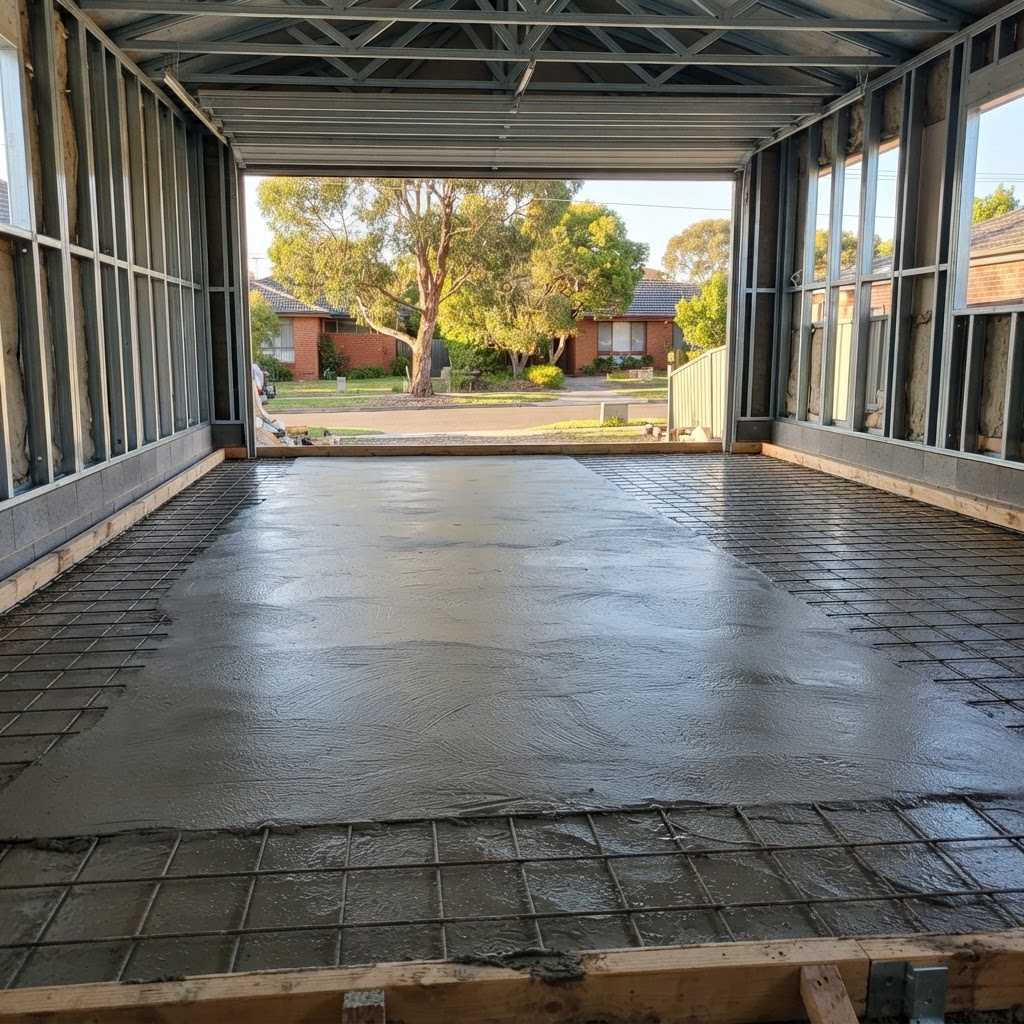
The ground under your driveway matters more than the finish on top
Brighton and much of Bayside sits on the Brighton Group sand formation — deep, free-draining sands laid down over millions of years along what was once an ancient coastline. It's a concreter's dream in many ways: the sands are stable, they don't heave and crack like Melbourne's reactive eastern clays, and they drain freely. But sand has its own behaviour, and if a driveway isn't built to account for it, the finish on top won't save it.
This guide is the technical authority content most concreting websites skip — because most concreters don't think about the geology under the slab. We do, because after 15 years pouring driveways across Brighton we've seen exactly how the sand-belt soils change the build. Understanding it is the difference between a driveway that lasts 30 years and one that starts to settle and crack within five.
What's under Brighton — and why it's different
The Brighton Group is a sequence of fine to medium sands, often with minor clay and organic layers, that underlies Brighton, Brighton East, Hampton and parts of Elsternwick and Caulfield. Compared to the reactive clays of Melbourne's eastern and south-eastern suburbs — which swell and shrink with moisture and can crack a slab that isn't designed for movement — Brighton's sands are dimensionally stable. They don't heave.
That stability is a real advantage, but it comes with two characteristics a concreter has to design for. First, sands can settle and migrate if they're not confined and compacted — a slab poured straight on loose sand can develop soft spots as the sand shifts under load. Second, sands drain so freely that water moves through them quickly, which is good for the slab but means surface drainage still has to be managed so water doesn't run under the edges and undermine the sub-base.
The answer in both cases is the same: a properly compacted road-base sub-base, the right reinforcement, and falls engineered to shed water off the surface. Get those right and Brighton's sands are an excellent foundation to build on. Skip them and the stability of the sand won't save you.
How we build on Brighton's sands
Salt, sun and sealers — building for the Bayside climate
Brighton's coastal position adds a second layer of design consideration on top of the soil. Salt-laden air and strong UV act on the surface of a driveway over time, particularly on exposed aggregate and coloured concrete. A quality salt-resistant sealer — acrylic or penetrating, depending on the finish — protects the surface paste and the exposed stone from chloride ingress and UV fading.
We seal every driveway as part of the build and recommend resealing every 2–3 years. It's a small, inexpensive maintenance step that materially extends the life and look of the driveway — and on a coastal build, it's not optional if you want the finish to stay fresh.
- Salt-resistant acrylic or penetrating sealers
- Reseal every 2–3 years for coastal homes
- UV-stable pigments for coloured concrete
- Falls engineered to shed water off the surface
Brighton sand belt FAQs
The Brighton Group is a geological formation of deep, free-draining sands that underlies Brighton, Brighton East and much of Bayside. Unlike the reactive clays of Melbourne's east, these sands are stable and don't heave with moisture — but they can settle if a sub-base isn't properly compacted, which is why reinforcement and compaction matter.
No — you still need a compacted road-base sub-base. The sands drain well, but a slab poured directly on sand can settle unevenly as water moves through the soil. A compacted sub-base gives the slab a stable, even bearing and is standard on every Brighton Concrete driveway.
Yes. On stable sands, SL72 mesh is often enough for a standard driveway, but wider spans or heavier vehicles may need SL82 or rebar. We size the reinforcement to the span and the load, not just to a default.
Even on sands, surface water needs to be managed with correct falls so it sheds off the slab and away from the home. Poor drainage causes surface staining and, over time, can undermine the sub-base at the edges.
Yes. Brighton's coastal position means salt-laden air and strong UV, which is why we use salt-resistant sealers and recommend resealing every 2–3 years. The sealer protects the surface paste and any exposed aggregate from chloride ingress.
We assess the ground, access and load at every free onsite measure and design the sub-base, reinforcement and sealer to suit. Book a quote and we'll explain exactly what your Brighton site needs and why.