
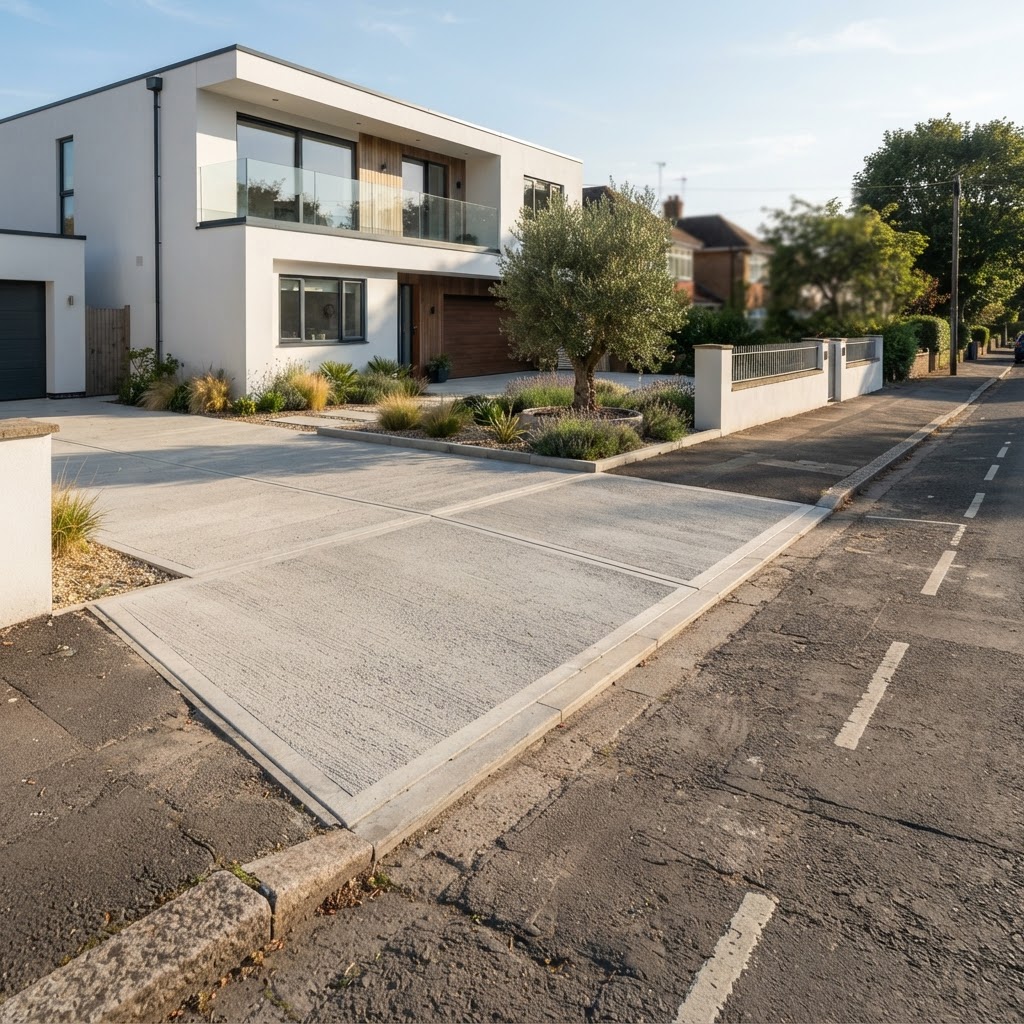
The crossover permit, explained properly
If you're building, replacing or widening a driveway in Brighton, the section that crosses the nature strip and kerb — the vehicle crossover — sits on council land and needs a permit from Bayside City Council. It also has to be built to the council's engineering standard and pass an inspection. No competitor publishes this process in detail, so we've written it out — because we handle these permits every week and know exactly how they work.
The crossover permit exists for good reason: the nature strip and kerb are council assets, and a crossing that doesn't meet the standard can damage the kerb, block drainage, or create a trip hazard. The permit and inspection make sure the work is done right — which protects you, because a compliant, signed-off crossing can't be queried later.
The good news is you don't have to deal with any of it yourself. We prepare the crossing to spec, lodge the permit application, manage any council queries, and arrange the inspection. But if you want to understand the process — and the common reasons applications get held up — here it is in full.
The Bayside crossover permit process, step by step
What Bayside City Council requires
Bayside's crossover standard covers the structural and geometric requirements the crossing has to meet. The key items are:
- Correct crossover width for the frontage and road
- Specified concrete strength (typically 25–32 MPa)
- Correct slab thickness and sub-base preparation
- Kerb profile matched and a neat transition to the road
- Drainage falls so water doesn't pool at the crossing
- Nature strip reinstated after the pour
Why crossover applications get held up — and how to avoid it
Most delays come from a handful of avoidable issues. Because we lodge complete applications, we catch these before they become problems.
Incomplete drawings
Applications need clear drawings showing the crossing, the kerb and the relationship to the property. We provide these with the application.
Width exceeds the allowance
A crossing wider than the council allows for the frontage will be rejected. We confirm the allowable width first.
Conflict with services
A crossing over a pit, service or tree can be queried. We identify these before applying and adjust the design.
Non-compliant construction
A crossing that isn't built to spec fails inspection and has to be rectified. We build to the standard first time.
Crossover permit FAQs — Bayside
A Bayside City Council crossover permit typically takes 2–4 weeks from a complete application, depending on council workload and whether any queries arise. We lodge a complete application to minimise delays and manage any council questions on your behalf.
The permit application fee is set by Bayside City Council and varies by the scope of work. It's included in our fixed crossover quote, so you know the total cost up front — there are no separate council invoices to chase.
You can, but the crossing must still meet the council's engineering standard and pass inspection. Most homeowners use a concreter because the spec (concrete strength, sub-base, kerb profile, drainage) is specific, and a non-compliant crossing can be ordered to be removed. We handle the whole process end to end.
Bayside City Council specifies maximum crossover widths based on frontage and road type — generally around 3.5m for a single crossing and up to 6m for a double, subject to the site. We confirm the allowable width as part of the permit application.
Once the concrete has cured, a council inspector attends to verify the crossing meets the standard — width, strength, kerb profile, drainage and finish. We arrange the inspection and address any items raised so the crossing is signed off.
Yes — even a like-for-like replacement of a crossover over the nature strip requires a Bayside City Council permit and inspection, because the work is on council land and must meet the current standard. We handle the application regardless of scope.